Customer-support chatbots can produce clear, fast replies, but a polished answer is not necessarily a correct one. Teams need a review method that tests policy accuracy, privacy handling, and the moment when a conversation should move to a human.
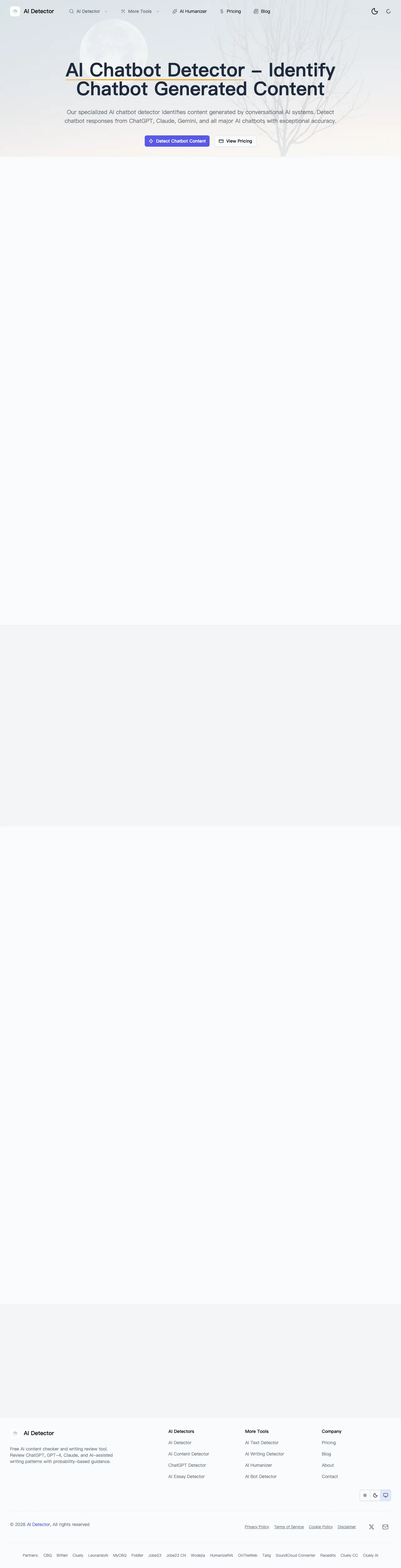
Product reference: the public AI Chatbot Detector page captured on July 19, 2026.
Last reviewed: July 19, 2026 Use case: quality assurance for AI-assisted customer support
Test against approved knowledge, not style alone
Build a small set of realistic questions from published policies, resolved tickets, and known edge cases. Every expected answer should link to the approved source of truth. Reviewers should score factual accuracy separately from tone and helpfulness.
Demonstration sample: “My annual plan renewed yesterday. Can I receive a refund?”
The test is not whether the reply sounds empathetic. It is whether it cites the current refund policy, avoids inventing an exception, asks only for necessary account details, and escalates when the policy leaves room for human judgment.
Use an escalation matrix
| Situation | Bot may do | Must escalate |
|---|---|---|
| Published how-to question | Link and summarize approved guidance | If instructions are unclear or outdated |
| Account-specific request | Ask for approved identifiers | Refunds, cancellations, or account recovery where policy requires staff |
| Sensitive complaint | Acknowledge and collect minimal context | Threats, safety concerns, legal requests, or vulnerable users |
Review transcripts in a privacy-safe way
Sample a limited number of conversations, remove unnecessary identifiers, and restrict reviewer access. Do not turn a quality program into a hidden surveillance archive. Aggregate trends—such as repeated escalation topics—can improve documentation without retaining every message indefinitely.
Where detection fits
An AI-detection tool may help identify material that appears automated when a team needs to route it for policy review. It does not verify that an answer is correct, that a customer understood it, or that a human did not edit it. For chatbot QA, the decisive evidence is the approved policy and the observable outcome.