
“Humanizing” can mean two very different things. It can mean editing a stiff draft so that it is clearer, more specific, and genuinely useful. Or it can mean trying to disguise authorship in a setting where disclosure is required. The first is an ordinary writing practice; the second can violate a classroom, workplace, or publishing policy.
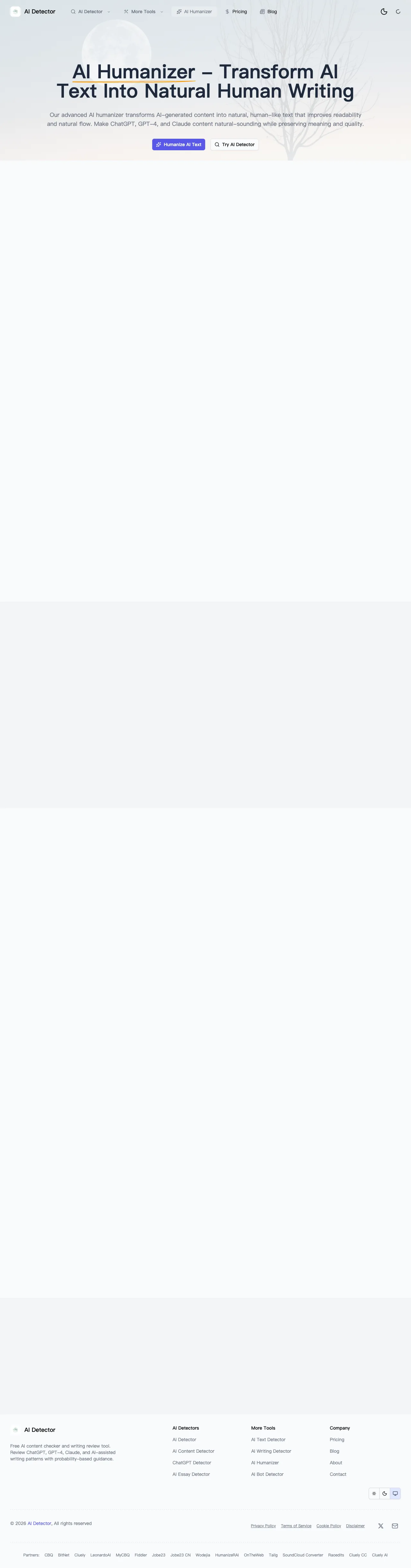
Product reference: the public AI Humanizer page captured on July 19, 2026.
Last reviewed: July 19, 2026 Use case: writers editing AI-assisted drafts for clarity and originality
Edit toward evidence and voice
An ethical edit makes the draft more accountable. Replace vague claims with sourced evidence, add first-hand observations where appropriate, name uncertainty, and remove decorative filler. If a reader asks how the text was made, the writer should be able to answer honestly.
Before: “AI is transforming many industries in unprecedented ways.”
After: “In this support workflow, the team uses an AI assistant to draft replies from an approved knowledge base; staff review refund and account-recovery requests before sending.”
The second version is useful because it identifies a scope and a process. It is not “more human” merely because of varied sentence length.
Check the rule before you edit
| Context | Safe question to ask |
|---|---|
| Classroom | What assistance must be disclosed under this assignment? |
| Client work | Does the contract require original authorship or approval of AI use? |
| Publisher | Does the byline or editorial policy require an AI-use note? |
| Internal documentation | Can a reviewer verify the source and owner of the final text? |
If the policy prohibits generative assistance, editing the output to avoid detection does not solve the underlying issue. Disclose, restart from permitted work, or ask the policy owner for guidance.
Detection should not become an editing target
Trying to optimize a draft for a detector score encourages superficial changes and can make writing less clear. Use a detector, if at all, as an editorial prompt: check for repetitive structure, unsupported certainty, or generic explanations. The quality goal is reader value and truthfulness, not an arbitrary probability threshold.
Google's people-first guidance similarly emphasizes original value, clear sourcing, and explaining substantial automation when readers would reasonably expect that context.